Showing posts with label Session Notes. Show all posts

Multitasking, Distraction, and (Not) Doing

Greetings, busy person! Fellow many-priorities person here.

Have problems with multitasking? It's become well known that multitasking is dangerous. Other than being ineffective, multitasking can cause brain damage, lowering IQ, and that's just the start.

There's so much science behind trying to multitask (including popular case-study accounts like The One Thing by Gary Keller or The Effective Executive by Peter Drucker) it's clear humans are meant to do one thing at a time.

Just don't multitask. Period. (Quick post, no?)

If you'd care for a the influential remarks that came to me about multitasking, read on!

Multitasking, Distraction, and (Not) Doing
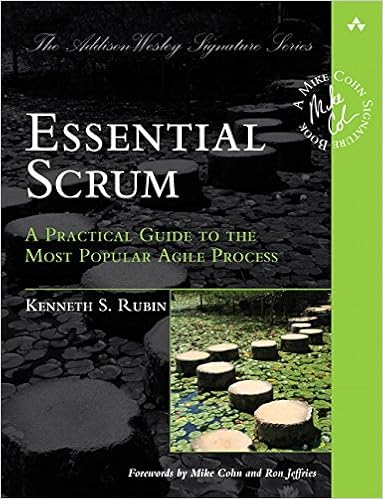
Book cover from Amazon.com

Reading Kenneth S. Rubin's book Essential Scrum: A Practical Guide to the Most Popular Agile Process hit me like a brick. It covers project development and management, though some real gold comes from the exercises. Here's one (try it yourself):

Set a timer, then say or write the following characters. Start by going row by row; record the time. Next, finish each column before trying the next; compare the times:
Image edited from Essential Scrum: A Practical Guide to the Most Popular Agile Practices

What do your times look like? Taking a guess, the row-by-row was a lot more time intensive than the column-by-column, or single-category attempt.

Mr. Rubin's test shows that multitasking such simple things as reciting together the alphabet and numbers destroys performance. Sticking to a single frame of mind saves time, if not also sanity.

Still think you can get away with multitasking? Try the test above again, but with some 'help': Turn on YouTube News, crank some music, and set a timer for ten seconds.

Those results aren't good.

This is interruption, distraction. Banes for those trying to get things done. It happens when watching (having to find a lost spot on the page or context of a scene), listening ("Could you repeat that?"), doing.

Interrupted or distracted 'doing' is especially harmful. 'Doing' is active, while hearing and seeing are naturally passive. Actions that become interrupted or distracted are like a speeding train that needs to stop (derailing) or gets onto the wrong track (oops), like a car where "they came out of nowhere" or that drifts into the other lane.

Don't 'do' during distraction.

'No longer doing' image from Pexels.com

Part of interruption can be putting something off for awhile. "Now's not a good time," you say. Well, the time gets good.

Or maybe you'd like to dust off one of those postponed projects. What you'll be faced with there is likely to be either:
  1. Irrelevant items (e.g. that blog outline predicting the outcome of the 2016 election does little in 2018)
  2. Analysis paralysis (there are so many things I could start again, maybe I'll organize them - I can't work in a cluttered environment, can I? [/sarcasm])
  3. Where to begin (where was I on project X?)
Or all of the above. Interruptions do happen (though you're working on negating them, right?). But just because something has had some effort invested doesn't warrant sinking more into the cost.

Thus the importance of no-to-do lists. When the majority of humanity lived in poverty, being able to do more was a sign of wealth. Now, when everyone - everyone - can do everything and wanting to do it all at once (multitasking), elites separate themselves over what they'll not do. From Tim Ferriss to Warren Buffet, success correlates with suppressing the 'noise' of virtually infinite possibility.

A wall doesn't have all its bricks laid at once, but one at a time. As such, picking a strength or two, a priority (maybe two), and sticking with them guarantees outcomes vs. their purgatory of being interrupted in multitasking.

Monotasking, Focus, and Exclusivity

We do better when working on one thing that has 100% attention. That doesn't mean other tasks are off the 'to-do' list, but there's only one place at the top. And that list? Carefully curated by excluding as much as possible from it so only the right work is done.

Now go forth, you hyper efficient person! Avoid multitasking multiples of 'doing', distracted 'doing', and 'doing' everything. You, your work, and those around you will be better for it.

(I know I am.)

It's Raining New Content: Rapid Test Iterations

(Games of Taste - Notes from a GDC 2013 session.)


Session presenter: Benjamin Seifert ( QA Lead - Riot Games )


Image from Riot Games Twitter account.
  • Look for analysts, not "testers".
  • Quality Assurance must be ready to commit no matter the project.
  • QA pick-a-path strategy for development: Subject Matter Expert (SME), People Management, and Project Management.
    • QA should be capable to pick-up on any of these skills.
  • Automated testing will catch things such as FPS drops; use it often.
  • Test things to see if it is fun for players (automation isn't everything).
  • Feedback playtesting comes in the forms of company group-play, intra-team play, and inter-team play.
  • “Is the cool new spider monster engaging?” - A verbatim question on the League of Legends Twisted Treeline map's content
  • QA starts by giving feedback on character concepts at Riot.
  • Ongoing challenges with Rapid Test Iteration: Continual training and innovation along with a lack of documentation.


Final Thoughts


  • Strive to reach a 0-bug build.
  • ‘Pain Score’: Each bug has this; if the score of a bug in a build is low enough, a build is released.
  • Content is the lifeblood of LoL.

Find more sessions like this at the GDC Vault.

IGDA Nanocon '12 Notes - The Lens of Truth

(Games of Taste - Notes from Nanocon '12.)


The Lens of Truth: Real World Adaptive Level Design


Speakers: Chris Totten (Art Director E4 Software) and Josh Lynsen (Creator of StreetPass Network)

How did we get here?


                How Chris got here:
    • Architecture Masters.
    • Self education in Blender.
    • Teaching on game development.
    • Writing on game development.
    • Doing game development.
    • Advice: Be self-motivated.  Put the time in.  It will work for you if you keep your head down and hit the grind-stone.

                How Josh got here:

    • Took the skill in his day job and applied it to what he wanted to do in game making.
    • Does things that apply to a part of game making.

Discussion


Use virtual clues for real-life treasure.
How to deal with structures that already exist
                Use Urbanism
                                - Large spaces can keep people away from each-other
                                - Paths, districts, nodes, landmarks allow for meeting
                Connectivity
                                - Cell phones/internet create a damaging interaction issue

Adaptive Game Reuse - take a game and re-center it around a place
                1. Games that enhance
                                - Simple mechanics to real-world situation
                                - Ex: item finding to explore locations
                                - Ex: virtual art/characters in real locations
                2. Games that pervade
                                - Events can only be executed in specific locations
                                - Going from point A to B affects the virtual world
                                - Ex: passing someone in life gives virtual goods/action
                3. Games that rehabilitate
                                - Jane Megonigle
                                                - Works on games that makes the world better
                                                - Gamify basic actions in a positive way
                                                - Ex: Tombstone Hold'em, Cruel to be Kind
                                - Gamifying a common feature/location

Chris and Josh: Creating a ‘Hometown social game’


  1. Goals
    • Revisit hometown and bring welcome visitors
    • Support local business and institutions
    • Inject new life into smaller/shrinking cities
    • Maintain links to - and value - your past
  2. Platform
    • Facebook, Google Plus or other social network
    • Any communal posting area that supports photos/discussion/moderation
  3. Guiding principles
    • Large amount of local control
    • Encourage tourism as much as revisiting
    • Especially support volunteerism
    • Especially support local festivals and city events
  4. Example point system for pictures taken:
    • 2 - you in town
    • 5 - you and local landmark
    • 10 - you supporting local business
    • 50 - you volunteering at local charity
    • 50 - you at local festival
  5. Rewards
    • Game enjoyment and community support
    • Gold, Silver, Bronze involvement rankings
    • No specific leader-boards
    • Less about competition, more about involvement
  6. Notes
    • No specific hometown?  You are a nomad player.
    • National chains ineligible for business photos.
    • Chambers of Commerce could be local bases.